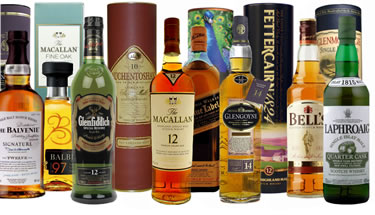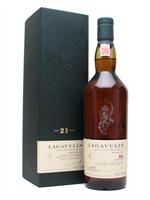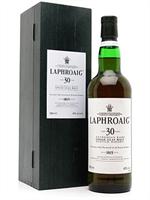
Perhaps it’s only a personal thing, but there is one strange phenomenon about those two Islay malts that I have encountered several times now: Whenever I taste them one after another, the second will always taste not as good as the first.

And this happens regardless of the order. Laphroaig first: Lagavulin won’t taste good. Lagavulin first: Laphroaig won’t taste good.

Both are excellent malts, and I if you pointed a gun at me, I would not be able to pick one as a favourite. But somehow they seem to be incompatible, at least for my personal taste. The in-your-face peat and medicinality of the Laphroaig and the fruity sherry character of the Lagavulin repel themselves like identical poles of two magnets.

The two distilleries are only one mile apart on the south coast of Islay. Both malts are heavily peated, and  yet it seems that they are like cat and dog.

Do you feel the same or is my experience utterly subjective?

{ 1 comment }

Glengoyne 12 yo Cask Strength

by Oliver on February 8, 2010

Buy at the Whisky Exchange

57.2%


My Tasting Notes:

Color: Dark gold
Nose: Not very strong, raisins, citrus, a hint of tea
Palate: Cocoa, caramel, faint oranges, quite spicy
Finish: Medium long, spicy
Overall: The wood spicyness is a bit too dominant for my taste, it takes quite a bit of water to soften it down. But still quite a nice dram.

Score: 81/100 – Price Tag $$$$$ – Value for your Money $$$$$

VN:F [1.8.1_1037]
User Rating:
Rating: 8.0/10 (1 vote cast)

{ 0 comments }

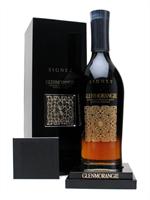
Glenmorangie Signet

by Oliver on February 7, 2010

Buy at the Whisky Exchange

The new flagship malt from Glenmorangie – 46%


My Tasting Notes:

Nose: Ripe fruit, chocolate, exotic spices
Palate: Coffee, chocolate, dark berries, ginger, orange zest, cinnamon
Finish: Long and spicy
Overall: A very good malt, well-balanced, full-bodied and very complex. But I think the price is a bit too much on the expensive side.

Score: 87/100 – Price Tag $$$$$ – Value for your Money $$$$$

VN:F [1.8.1_1037]
User Rating:
Rating: 9.0/10 (2 votes cast)

{ 1 comment }

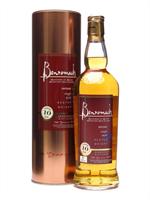
Benromach 10 yo

by Oliver on February 6, 2010

Buy at the Whisky Exchange

The new standard botling after the reopening – 43%


My Tasting Notes:

Color: Gold
Nose: Citrus fruit, smoke, oriental spices
Palate: Peat, caramel, citrus, a bit of liquorish and nutmeg
Finish: Long, dry and smoky
Overall: Surprisingly peaty, but well balanced with spices and a slight sweetness. I am looking forward to older expressions with the same character.

Score: 84/100 – Price Tag $$$$$ – Value for your Money $$$$$

VN:F [1.8.1_1037]
User Rating:
Rating: 8.5/10 (2 votes cast)

{ 1 comment }

Mekhong “Whisky”

by Oliver on February 5, 2010

A famous spirit drink from Thailand – 35%


My Tasting Notes:

Color: Dark amber
Nose: Very intense and herbal, mostly lovage
Palate: Herbal and slightly bitter but quite smooth
Finish: Non-existant
Overall: The only thing this has in common with whisky is its colour. No surprise, as its is made from molasses, rice and spices. It reminds a bit of a diluted Italian herbal bitter like Ramazotti or Fernet. It might be quite nice on the rocks as an aperitive, but don’t expect proper whisky, if you order one.

Score: 45/100 – Price Tag $$$$$ – Value for your Money $$$$$

VN:F [1.8.1_1037]
User Rating:
Rating: 4.0/10 (1 vote cast)

{ 0 comments }

Buy at the Whisky Exchange

Aged for six months in a Californian wine cask – 50%


My Tasting Notes:

Color: Pinky Vodka
Nose: Malt, pears, grapes and a hint of lemon.
Palate: Very spicy at the start, then cherries and pears.
Finish: Long and spicy
Overall: In my opinion this experiment does not work. Maturation is too short for much  influence of the cask, so it is basically a mixture of the fruity newmake with a little red wine. These tastes don’t mix very well. I much prefer the raw newmake.

Score: 64/100 – Price Tag $$$$$ – Value for your Money $$$$$

VN:F [1.8.1_1037]
User Rating:
Rating: 6.0/10 (1 vote cast)

{ 0 comments }

Buy at the Whisky ExchangeNewmake from Speyside – 50%


My Tasting Notes:

Nose: A strong pear aroma joined by a bit of malt and a slight floral note.
Palate: Peppered attack, then quite sweet, pears, more pears and malt
Finish: Very long, fruity and sweet
Overall: You would not beleive that this is supposed to become whisky once. It reminds more of a pear eau de vie than anything else. Quite enjoyable in its own right though, but with a solid price tag.

Score: 76/100 – Price Tag $$$$$ – Value for your Money $$$$$

VN:F [1.8.1_1037]
User Rating:
Rating: 8.0/10 (1 vote cast)

{ 0 comments }

Adelphi Laudale 12 yo

by Oliver on February 1, 2010

From an undiclosed Speyside distillery – 46%


My Tasting Notes:

Nose: Very full, ripe berries, dusty cupboard, a hint of tea
Palate: Cherries, tea, chocolate, a bit of pepper
Finish: Very long, fruity and dry
Overall: This is an exceptionally rich and dark sherry whisky, quite dry but not disturbingly so. Very complex and thoroughly enjoyable.

Score: 88/100 – Price Tag $$$$$ – Value for your Money $$$$$

VN:F [1.8.1_1037]
User Rating:
Rating: 9.0/10 (1 vote cast)

{ 0 comments }

Royal Lochnagar 12 yo

by Oliver on January 31, 2010


Buy at the Whisky Exchange


40%


My Tasting Notes:

Nose: Vanilla, apples, citrus fruit, a slight hint of smoke
Palate: Vanilla, nuts, slightly spicy, just a faint fruitiness
Finish: Medium long, mostly vanilla, minimally smoky
Overall: The nose is quite pleasant, but the palate lacks complexity and is a bit bland.

Score: 72/100 – Price Tag $$$$$ – Value for your Money $$$$$

VN:F [1.8.1_1037]
User Rating:
Rating: 7.0/10 (1 vote cast)

{ 0 comments }

How Much Room Is There for Whisky Experiments?

by Oliver on January 31, 2010

Experiments have always played a role in whisky making, especially since the single malt boom took off in the late 1980s and early 1990s. With about a hundred distilleries in Scotland alone, it became neccessary to stand out from the crowd, if the ditstillery had higher goals than just to produce anonymous spirit for the blend industry. Turning a distillery name into a brand requires that the own products are perceived as different (and of course better) than the ones of the competitiors.

It All Started With Finishing

Until recently, most experiments were on the field of finishing which means refilling the whisky from its original maturation cask into another cask that previously been used to mature any other alcolholic drink for a relatively short period just before bottling. One of the pioneers in finishing were Glenmorangie whose early success was to be copied by many other distilleries and independent bottlers. Even American Bourbon distilleries now are more and more inclined to test the limits that restrictive US legislation sets to the maturation of bourbon whiskey.

The State of the Art

The last years have seen a broadening in the field of experimentation. Apart from the ever-popular finishing there are now

  • Single Malts matured in fresh oak casks, like Bunnahabhain Darach Úr
  • “Finishing” with heavily toasted cask components, like Compass Box Spice Tree
  • Vattings of peated and unpeated malts of the same distillery, like Jura Superstition
  • Smaller casks used for faster maturation, like Laphroaig Quarter Cask
  • Releases of “underage” sprits and newmake, like from Glenglassaugh or Kilchoman
  • Extreme “peat monsters” that push the phenol content to new levels, like Ardbeg Supernova or Bruichladdich Octomore

For some distilleries, notably Bruichladdich, this has led to a portfolio of bottlings that can only be described as “flamboyant”. But as long as the whisky lovers back up this trend by buying these experimental bottles, I see no reason not to take experimenting a step further.

Just as a side note, the diversification of product portfolios is absolutely not restricted to the whisky industry. I think it is a general global trend. Just recently I counted the number of different varieties of 100 g cocolate tablets from renowned Swiss manufacturer Lindt at our local supermarket. There were more than 50, not taking into account other Lindt products like variety boxes and other confectionery.

Ideas for the Future

With a bit of imagination, it is not difficult to come up with ideas for new experimets in whisky production.

1. Pushing the Limits

There are quite a few possibilities for exeriments that are compliant with the current regulations on making whisk(e)y, like for example:

  • Why not try a peated single grain?
  • Make a single blend from 50% pot still grain and 50% malt whisky and let it age for 12 years or more.
  • A Scotch rye whisky from a sherry cask could be very intriguing (legal as long as there is also some malted barley involved).
  • Let your cooperage rebuild casks with alternating staves from sherry and bourbon hogsheads for combined sherry/bourbon maturation.
  • Use other fuels for malting like beech or wood from fruit trees.
  • Americans could try hickory or mesquite smoked malted corn or barley in their mashes.

2. Beyond Whisky

For distilleries that are not afraid of not being allowed to label their spirit as “Whisky”, there are even more options:

  • Use different types of wood for casks, like hickory, chestnut or cherry. Perhaps as additional staves in oak casks.
  • Use 100% malted grain other than barley
  • Re-distill your newmake after letting it infuse with botanicals or other ingredients (“Ginsky”)
  • Make “whisky grappa” from the mash residue and let it mature like whisky

Of course none of these ideas is guaranteed to work, but hey, that’s why they are experiments.

{ 0 comments }